Mobile Light Tower Specs Explained: Mast Height, Lumens and Runtime
Spec sheets in this category are written to win comparisons, not to help you plan a site. This guide explains what each number really means, which ones change your tower count, and which ones you should treat with suspicion.

Spec Sheets Are Marketing Documents
Every number on them was chosen by someone selling something
Compare three light tower brochures and you will notice the same pattern: each one leads with the figure where that machine happens to look best. One leads with lumens, one with runtime, one with mast height.
None of those numbers is wrong. They are just selected, and a contractor comparing them is being invited to compare on the seller's terms rather than the site's. ⚙️
Mast Height — the Spec That Decides Coverage
Height is what turns a lamp into area lighting
If you only read one number, read this one. A lamp at 4 m throws a small, hard pool of light. The same lamp at 8 m spreads that light across a far larger area with softer shadow edges.
That is why mast height changes your tower count more than lamp wattage does. Two units at 8 m will out-cover three units at 5 m on open ground.
Telescopic versus fixed
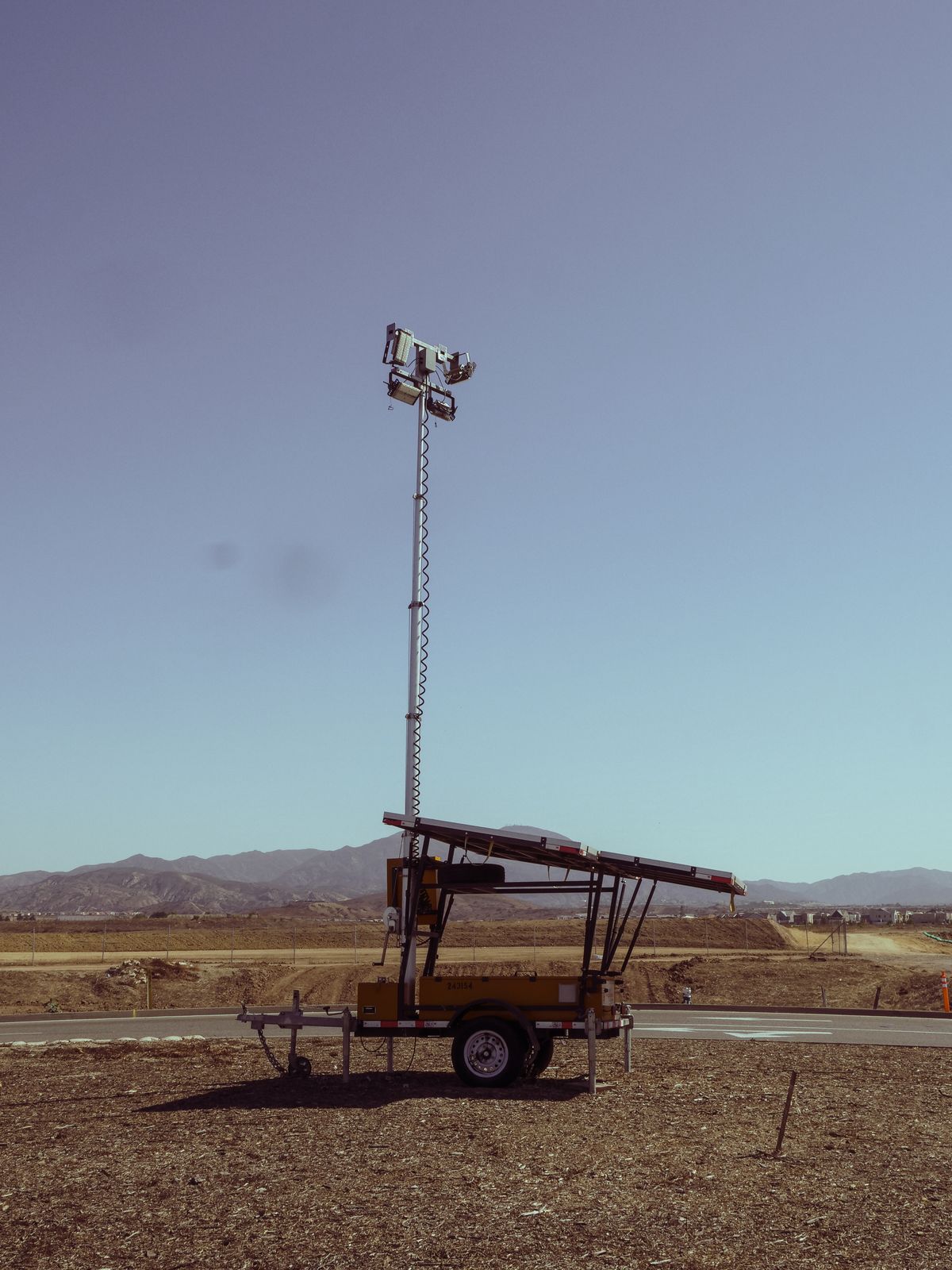
A telescopic mast extends from a stowed height for towing to full height on site. Ours is an 8 m telescopic mast — it goes up for work and comes down for transport and for bad weather.
Height also controls glare
A high mast sends light downward onto the work. A low one sends it sideways into people's eyes. On sites next to live roads, this is a safety consideration and not just a coverage one.
Lamps and Wattage
What the configuration tells you
Our unit carries four 500 W lamps, which is 2,000 W of lighting load. Four separate heads matter more than the total: each one can be aimed independently, so you can cover 360° around the mast or concentrate three heads on one work front.
Wattage is an input, not an output
Wattage describes electrical consumption, not light produced. Two 500 W fittings from different manufacturers with different optics do not put the same amount of usable light on the ground.
Treat wattage as a rough class indicator — it tells you the unit is in the same category as another unit, not that it performs identically.
Lumens, Lux and Why They Get Confused
Two different measurements
- Lumens measure the total light a source emits. It is a property of the lamp.
- Lux measures light landing on a surface — lumens per square metre. It is a property of a place on your site.
A brochure lumen figure tells you nothing directly about the lux at the far corner of your pour, because lux depends on distance, mast height, aiming angle, obstruction and weather.
Be careful with headline lumen claims
Lumen figures are quoted in several different ways across the industry — raw lamp output, output after the fitting, output after losses. Unless you know which convention a brochure is using, comparing two lumen numbers is comparing nothing.
Plan from area coverage instead, which is what our coverage guide is built around.
Runtime and Fuel Figures
Runtime is always conditional
Any runtime figure assumes a load, a tank level and an operating condition. Run all four lamps all night in Malaysian humidity and you will not get a lab number.
Ask a supplier what load and what conditions their runtime figure assumes. If they cannot say, it is a marketing number.
The practical version of the question
What you actually want to know is: how often does somebody have to walk out and refuel this thing? That is a site-routine question, and it belongs in your shift plan alongside the daily lamp and fluid checks.
Trailer, Winch and Outriggers
The unglamorous specs that decide whether it gets used
A light tower that is awkward to move gets set up once and left there, which defeats the point of a mobile unit.
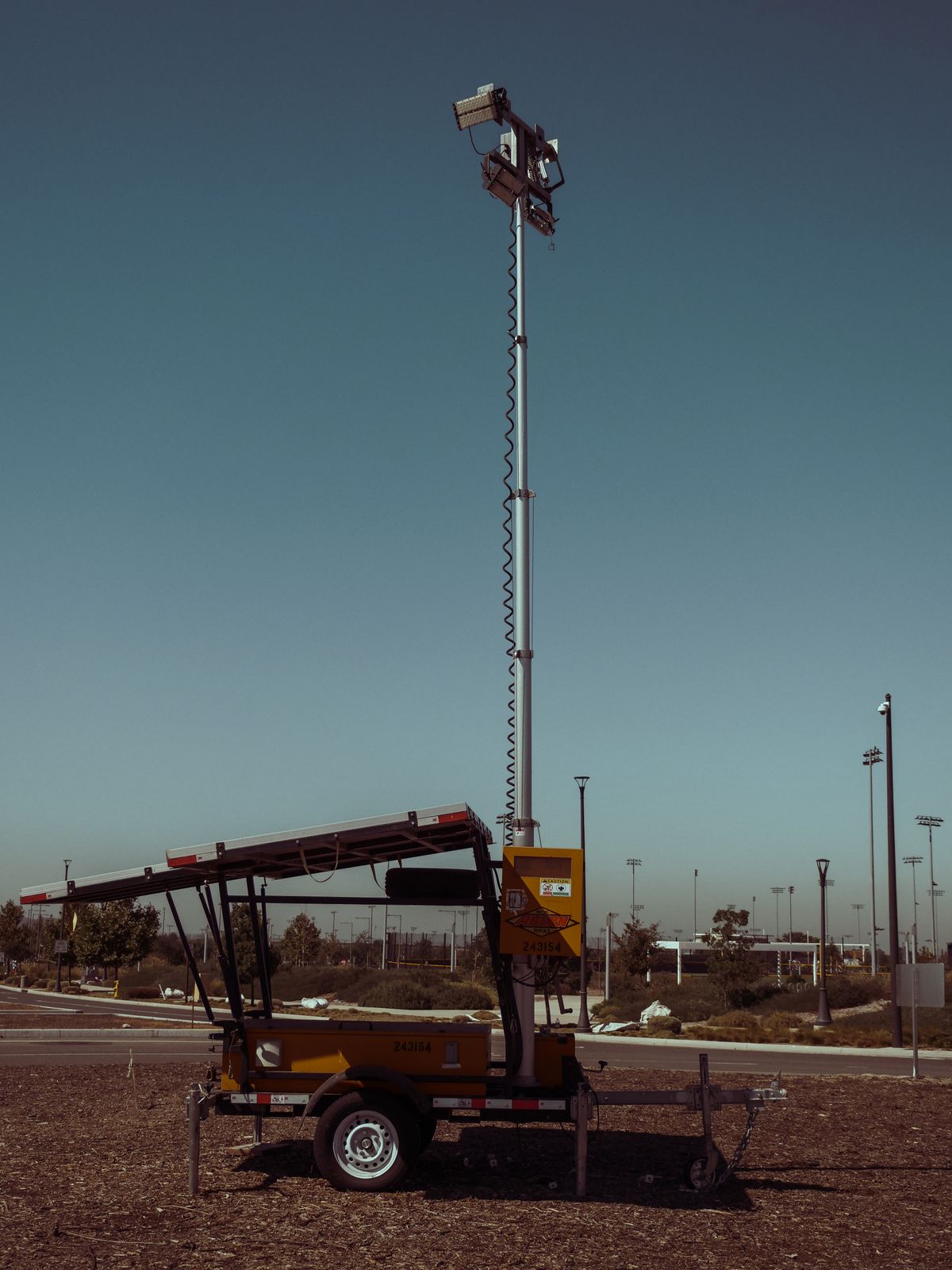
- Trailer and hitch — the unit is road-towable, so it can be repositioned as the work front moves
- Winch — raises and lowers the mast without a crane or a lift
- Outriggers — stabilise the unit once it is positioned; on soft ground, use pads under them
On a site where work moves weekly, these three things affect your outcome more than any optical specification.
What We Publish About Our Own Unit
The TerangPro unit is an MCWEL MLT8S (2025). Here is everything we state about it:
- 8 m telescopic mast
- Four 500 W lamps
- Silent diesel generator on board
- Trailer-mounted with hitch, winch and outriggers
- RM 3,500 per unit per month, delivery and set-up arranged
We deliberately do not publish a generator kVA rating, fuel tank capacity, runtime hours, lumen output, IP rating, tow weight or dimensions. Not because they are secret, but because we will not put a number in writing that we cannot verify from the machine's own documentation — a contractor could size a job off it.
If you need one of those figures for a submission, message us and we will check the specific unit rather than quoting a brochure.
Ask Us About the Machine
Questions about the unit, or want it on a site? Send the location, the area to light and your dates. We rent nationwide, including tower light rental in Ipoh, light tower rental in Miri and the rest of our coverage.
Frequently Asked Questions
What mast height do I need?
For general site coverage, more height is better up to the point where wind and access become the limit. An 8 m telescopic mast is a practical size for most Malaysian construction and road jobs.
How many lumens does your light tower produce?
We do not publish a lumen figure, because we cannot verify one from the machine's documentation and lumen conventions vary between manufacturers. The unit runs four 500 W lamps on an 8 m mast — plan from area coverage instead.
How long does it run on a tank of fuel?
We do not publish a runtime figure for the same reason. Refuelling is a site routine, and it should sit in the shift plan next to the daily checks.
Is 4 × 500 W enough for a large site?
One unit covers roughly 3,000 to 4,000 m² as a planning estimate. Larger sites use more units — the number comes from area, not from lamp count.
Can the lamps be aimed separately?
Yes. Four independent heads means you can spread coverage around the mast or concentrate output on one work front.
The Short Version
Mast height is the spec that decides coverage. Wattage is a class indicator. Lumens and runtime are the two numbers most often quoted without context, so ask what conditions they assume before you plan around them.
And be a little suspicious of any supplier whose spec sheet has no gaps in it at all. 🔦