Night Work Lighting on Malaysian Construction Sites: What DOSH Expects
There is no single lighting number you can put on a form and be finished. Malaysian night-work lighting sits inside the general duty of care and your own risk assessment — here is what that means in practice, and how to make it defensible.

Why There Is No Single Lux Number to Quote
The honest answer is the useful one
Contractors often ask us for "the DOSH lux requirement" as though there is one figure that covers a night pour, a scaffold erection and a traffic management layout.
There isn't. Lighting levels appropriate to a task depend on what the task is, and the obligation on the site is to assess the risk and control it, not to hit a single universal number.
Any supplier who hands you one number and tells you that is the rule is selling you certainty they do not have. 📋
The Framework Your Night Works Sit Inside
The general duty of care
The Occupational Safety and Health Act 1994 places a duty on the employer to provide, so far as is practicable, a working environment that is safe and without risks to health. Lighting on a night shift is part of that environment — it is not a separate topic.
Sector guidance and client requirements
On top of the Act, most Malaysian projects carry additional layers: DOSH guidance documents, the client's own HSE specification, CIDB requirements on registered sites, and often a main contractor's method statement that is stricter than any of them.
In practice, the client's HSE specification is usually the document that decides what your site has to achieve. Read it before you size the lighting, not after.
Confirm the numbers with the people who own them
Where a specific illuminance level applies to your work, it will come from the project specification, an applicable standard, or your safety officer's assessment. Confirm it there. We are a light tower rental company, and we are not the right source for the legal threshold on your particular job.
Lighting Belongs in the Risk Assessment
HIRARC is where it gets recorded
Malaysian sites use HIRARC — Hazard Identification, Risk Assessment and Risk Control — as the standard method for documenting hazards and what is being done about them.
If your site works at night, lighting should appear in that document as an identified control, with the arrangement described. "Two mobile light towers positioned at the north and south work fronts, masts at full height" is a control. "Site will be adequately lit" is not.
What a good entry contains
- The specific night activities being carried out
- The lighting provided, by type, quantity and position
- Who checks it at the start of each shift, and what they check
- What happens if a unit fails mid-shift
- How glare toward roads, neighbours and plant operators is controlled
That last point gets missed constantly, and it is the one that turns a lighting control into a new hazard.
General Lighting Versus Task Lighting
They do different jobs
General lighting lets people move around the site safely — walkways, access routes, plant movement areas, the space between work fronts. This is what a mast unit at height is good at.
Task lighting lets someone do detailed work — reading a level, setting rebar, making a connection. It sits close to the work and is usually a separate, smaller provision.
A common and expensive mistake
Hiring more light towers to fix a task-lighting problem does not work. Height gives you area coverage, not close detail. If the crew cannot see what their hands are doing, add task lighting at the work face and leave the tower count alone.
The Four Lighting Hazards Inspectors Actually Look For
- Dark seams between lit zones. Two pools of light that meet exactly leave a shadow line where the ground changes — a classic trip point. Overlap them.
- Glare into cabs and traffic. A mast aimed at an excavator operator or an oncoming lane makes the situation worse, not better. Raise the mast fully and angle downward.
- Trailing cables. Every metre of extension lead across a walkway is a hazard. This is the strongest safety argument for a self-powered unit — the generator is on the trailer, so there is no cable run at all.
- Unlit access and egress. Sites light the work and forget the route people walk to reach it. Check the gate, the walkway and the welfare area, not just the work front.
Making the Site Defensible in Practice
Walk the site after dark before the first shift
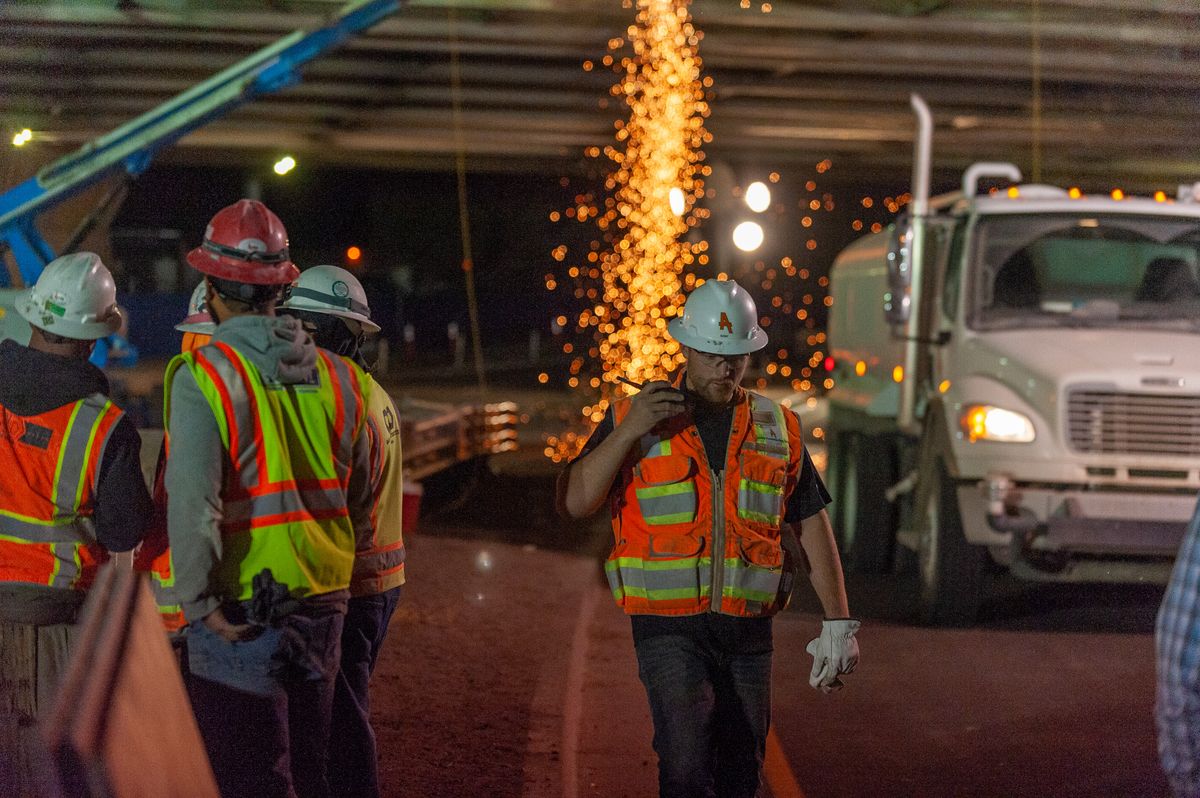
The single most useful thing you can do is walk the whole site at night, with the lighting on, before the crew arrives. Shadows, glare and dark access routes are obvious on foot and invisible on a plan.
Record the arrangement
Photograph the lighting layout on the first night and keep it with the HIRARC. If anything is questioned later, a dated photograph of the actual arrangement is worth more than a paragraph of intent.
Build in redundancy where the work is critical
If a pour or a shutdown cannot pause, the lighting plan should survive one unit going down. That usually means one more tower than the coverage calculation strictly requires. Our coverage guide walks through that calculation.
Get Lighting on Site for Your Night Works
Send us the site, the area to light and the dates. We deliver, position and stand up the units, and quote one fixed monthly rate per tower. We cover night works nationwide, including Kuala Lumpur, George Town and Kuching.
Frequently Asked Questions
What lux level does DOSH require for night construction work?
There is no single figure that applies to all night construction work. The requirement is to assess the task and control the risk; where a specific level applies to your job it will come from the project specification or an applicable standard. Confirm it with your safety officer.
Does the lighting arrangement need to be in the HIRARC?
If you are working at night, it should be. Lighting is a control for a real hazard, and a control that is not documented is difficult to defend.
Do mobile light towers need a permit?
The unit itself is towed plant. Where it can be positioned — particularly in or near hazardous areas — is governed by the site's own permit-to-work system. Clear the position with the site's safety team.
Is a light tower enough on its own for detail work?
Usually not. A mast unit provides general area lighting. Close detail work normally needs task lighting at the work face as well.
How do I stop a light tower glaring onto a public road?
Raise the mast to full height and angle the lamps downward and inward, away from the carriageway. Height reduces glare because the light comes down onto the work rather than across at eye level.
The Short Version
Lighting on a Malaysian night shift is governed by the general duty of care and by your own risk assessment, not by a single number you can look up. Document the arrangement, walk it after dark, and control glare and dark seams as deliberately as you control brightness.
Then make sure the plan survives one unit failing at 2 a.m. 💡